greenhouse
for
contemporary art
super bien!
space
translations
| 13.9. - 10.11.2008
Perla Montelongo
It is still a custom to domesticate the world’s image. Since the Renaissance, the space around us -which we call “reality”- enters on the canvas, paper o screen, with the pretension of being a mirror to whatever is before our eyes. The development of perspective as a strategy of representation, made the transition from the psycho-physiological space to another mathematical space that stands like an artifice capable of fooling our perception, knitting a new reality that tried to hide its stitches.
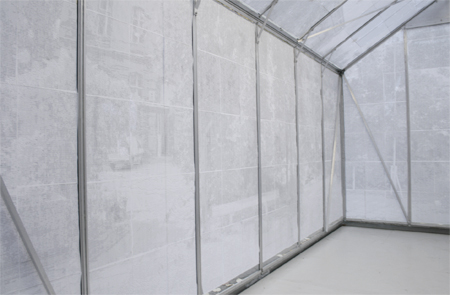
The construction process for this unique representation is done by
recreating landscapes that we see through windows, through interweaving
a series of alphabetical and numerical characters from the ASCII code.
In “Space translations” the drawing masks the reference,
liking its same face but at the same time showing us the elastic bands
that support the mask. The magic of the image is activated, at the
same time showing us the secret to the trick. The ghost of reality
is still there, the drawing still informs us the landscape we see
thought the window, but the result is not only of the drawing as a
product but as its process.
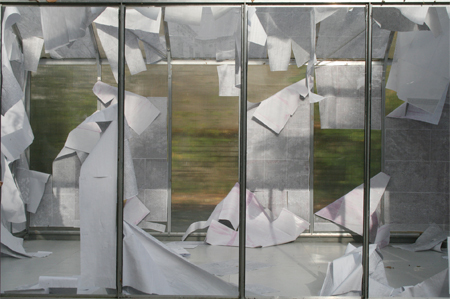
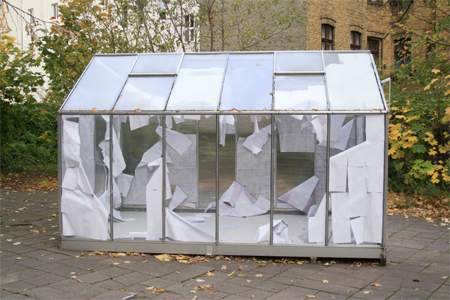
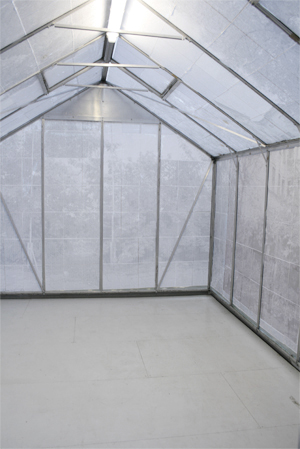
In this adjustment operation, each A4 page that composes the installation,
functions as a piece of a puzzle that doesn’t show us reality,
rather the will of language to be virtual. The ASCII code cannot be
read, it is a drawing, but as a
spectral diagram, not as a mirror, and is evidence of how each representation
is a translation.
Text: Valentina Montero
Tr.: Yessica Enríquez
(ESPAÑOL)
Seguimos acostumbrados a domesticar la imagen del mundo. Desde el renacimiento que el espacio que nos rodea –al cual llamamos “realidad”- entra en el lienzo, en el papel o en la pantalla, con la pretensión de ser un espejo de lo que está frente a nuestros ojos. El desarrollo de la perspectiva como estrategia de representación, supuso la transición de un espacio psico-fisiológico a otro matemático que se erige como artificio capaz de engañar a nuestra percepción, tejiendo una nueva realidad cuyas costuras intentaba esconder.
A través de la recreación del paisaje que vemos por
la ventana, mediante una trama de caracteres alfabéticos y
numéricos propios del código ASCII, se delata el proceso
de representación como construcción. En “Space
translations” el dibujo enmascara al referente, hilvanando su
mismo rostro pero mostrándonos los elásticos que sostienen
a la máscara. Se activa la magia de la imagen, pero contándonos
cuál es el truco. El fantasma del real sigue estando ahí,
el dibujo sigue informándonos del paisaje que vemos por las
ventana, pero el resultado ya no es sólo el dibujo como producto,
sino su proceso.
En esta operación de calce, cada hoja formato A4 que compone
la instalación, opera como pieza de un puzzle que nos muestra
ya no la realidad, sino la voluntad del lenguaje como verosímil.
El código ASCII no se lee, se hace dibujo, pero como diagrama
espectral, ya no como espejo, haciendo evidente cómo cada representación
es finalmente una traducción.
Texto. Valentina Montero